Our industry is obsessed with chasing
unicorns and getting high compensations.
But, how did three tech veterans defy
this trend and successfully build a
seven-figure business based entirely by
burning this culture down? What's up,
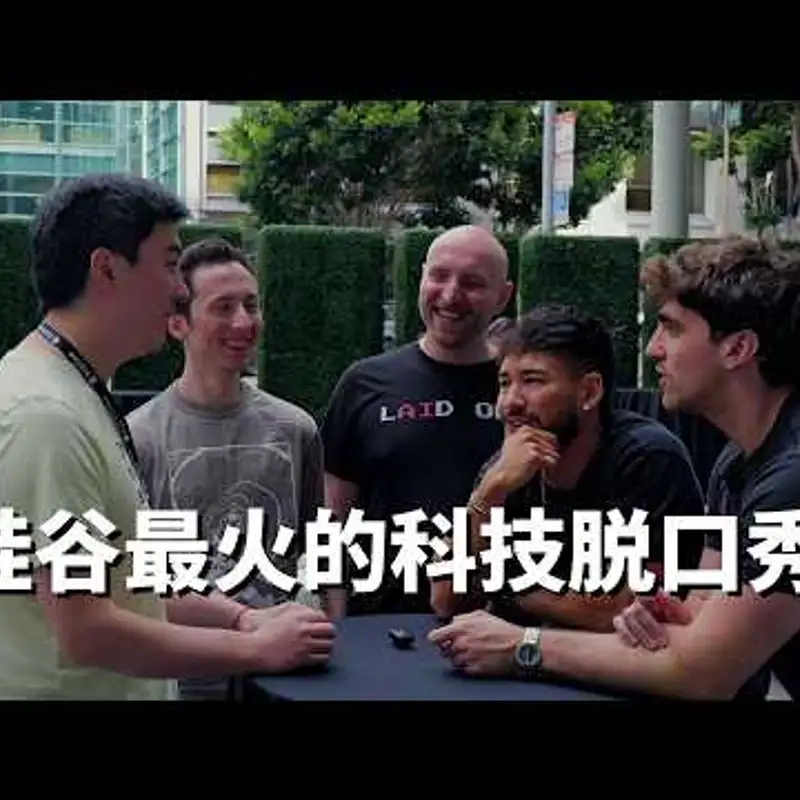
guys? I'm Mike Z. Today, I'm with
Austin, Jesse, and Nick Tal. The three
founders of the most satirical [music]
show in Silicon Valley.
>> This is good technology.
>> The Tech Roast Show.
We are here to discuss not only their
success and journey, but the absurdity
they find in today's tech environment.
How they blend their passion for comedy
with calling out that absurdity.
>> There was a department in Meta that was
essentially entirely Tech Roast. They
had a whole Tech Roast division. So, we
just took that, carved it out, and
turned it into our own.
>> And turn it into a money-making machine.
We also have a deeper conversation about
the safety net that allowed them to
start their own thing and chase their
dream.
>> I was supported by my parents and my
family for [music] the first like four
years of doing stand-up, and they
allowed me to mostly financially depend
on them. I was making a tiny bit of
money, but I was not making a living,
and without that, I would not have been
able to practice comedy the way I did.
>> Here is the full conversation.
>> [music]
>> So, I want to ask you a question you
posted to the story. Ironically,
software is now the more unstable than
comedy.
>> Ironically, the software
job market is less stable than comedy.
>> Yes, yes, yes.
>> I think I posted that. I see. I think
there was a point when it certainly felt
that way. I don't know if it was like
factually true. My my guess is when the
big wave, one of the big waves of
layoffs
>> Comedy is more stable than software.
>> You made the joke that comedy is more
stable.
>> Yeah. Yeah. But, I think the other piece
is you must have growing your business
so well that uh this feels like a legit
business and uh feels stable and uh I
don't think many people have that
perspective.
>> It does not feel like a legit business.
It is a legit business, but it rarely
feels that way. I think cuz what we do
is so fundamentally absurd.
>> We are trying to build a company that
has like employees and real
responsibility in the world. So, as of
right now, we have three full-time
employees. Uh Brendan does production
and a lot of the logistics and he is
sort of building out our long-form
content branch of the company.
>> And and and to clarify, that's three
full-time employees that are not part of
the four equal owners of the company.
So, there's seven in total.
>> There's another producer who's a part of
the company who's not here right now who
is uh
there he's an equal partner of them
three and he's my most direct boss cuz
he's the other producer. Uh they're the
talent, the pretty faces of the company.
>> The structure of the company is sort of
a board of four co-owners, directors,
and we started the company together and
we've been doing I mean, I joined a year
into the company's existence. They
started it together. We did the show for
a few years and finally, I think
1 year ago or so, we were finally in a
position to hire some people full-time,
to scale the show up, and to make more
content, and to just like streamline
what we're doing. Brendan uh is the
first person we hired who is currently
with the company and uh since then, we
hired two more people. So, it's a total
of seven people working in the company
full-time.
>> And then we have uh a various like chain
of vendors and people we work with in
part-time capacities.
>> Oh, yeah. How much is uh that
>> Uh there's probably
how much expense is going to the
vendors?
>> I don't know how much expense is, but we
probably have like 10 to 20 people we
work with.
>> There is uh videographers,
photographers, there is people who uh
there's ushers at in different cities,
there is people who us with logistics
and it's a lot of people depending on
the needs. There's a friend of ours is
helping with the India tour like to
navigate the whole thing. There is a lot
of people we regularly work with but
there's
>> All I can say is we are proud
seven-figure business.
>> It's a seven-figure business with seven
people on the four year figure business.
So once we get to eight figures we're
going to we're going to hire one more
person.
>> Or more. Nice.
>> Comedians can be a real
career. That was new like to me. Like
was that is a passion or you want to
pursue the career and when did you
realize okay we need to start a company
and to do do this more regularly?
>> So we were we were all pretty high up at
Meta and what we found was that the
tools that we're using internally at
Meta are going to sell for a pretty
penny on the open market.
>> There was a department in Meta that was
essentially entirely TechRost. They had
a whole TechRost division. So we just
took that carved it out and turned it
into our own.
>> If we grab this thing
>> until it's real we run real fast and
then we very quickly start and scale a
company just selling them whoever wants
to buy them.
>> Yeah. I mean that's what we did. I took
Austin under this arm and Nikita under
this arm and I went like this
and I ran out the door.
>> We didn't know what was happening but
then when we came to we were a
completely different company. I mean we
had a different name, same product,
different name though.
>> Many people do not like their job but
they're afraid to take a leap. When you
start a company you must have taken a
leap of faith.
>> Yeah. So in terms of like leaving a big
tech job and making a jump like that I
think at the time of TechRost starting
well none of us actually did it then but
I think my experience is pretty close to
that because I was working at Microsoft.
I left a
We were doing it for at least three
years. Actually three years. We really
weren't making much money but I started
building up like side income streams to
like cushion my fall from grace when I
leave.
>> Like what?
>> Real estate. Airbnb and rental property.
Had some income offsetting my expenses.
And then it was actually a really
interesting time for Tech Row Show
because it was a year after COVID when
when this happened. And we weren't able
to do any shows, but there was a
silver lining in that the government was
offering grants to
entertainment companies that couldn't
operate during COVID. And we got about
$40,000 from the federal government.
>> [laughter]
>> And that we did not have to pay back. So
that, in addition to some of like
making some money on TikTok and then
offsetting my
my expenses with rental income, I was
like, "Oh, this is the best time ever to
to do this cuz we actually had a good
amount of money to invest in rents for
shows."
>> I wasn't as diligent with my savings.
Back then I just quit my job, made no
money, lived with my parents for 7
years, didn't spend any money.
I just waited for this to work.
>> You know, my story is
I don't pretend to have
to have gone through some like unusual
amount of struggle, but as an immigrant
and non-native speaker of English, it
wasn't easy to like get into comedy and
to like even consider the possibility of
going on stage and performing in a
language that's not my own. So I think
that I I hope that to the immigrants in
our audience at least that's something.
>> I was talking Chinese. I'm much more
fluent, but
English I feel
>> I will also meet now.
>> I was in an extremely privileged
position of having gone to a US college
and I I got to learn the language that
way. That helped a huge amount. My wife
just pushed me to do comedy for months
and months because we grew up in Russia
where there was no stand-up. Stand-up
did not exist. Didn't make $400,000
through GameStop and that paid for the
portion of the apartment that I own. And
I don't own the full thing. So yeah,
answering that question without
acknowledging the privilege that allows
that is bad, but I think it's a relevant
part of how we were able
>> Sure. I was just answering the question
for me.
>> All I'm saying is I lived with my
parents for 7 years, and if I fully get
that that's a luxury, not everybody
getting live with their parents for 7
years.
>> Not everyone can have an Airbnb.
>> [laughter]
>> But my parents had an extra room.
>> I was supported by my parents
and my family
for the first like four years of doing
stand-up. I lived in Seattle, and they
allowed me to mostly financially depend
on them. I was making a tiny bit of
money, but I was not making a living,
and without that I would not have been
able to practice comedy the way I did.
>> I think the privilege is important
because audience, especially especially
those people who get to work in tech, we
all have privilege. We all have a
high-paying job. Still, like ask the
question of why, like what's making your
passion into action?
>> Like insecurity and fear of the life
that I would have if I just did.
>> When I joined Microsoft, I was I had
this fear in my head cuz I didn't want
to go to Seattle. I thought it was
really depressing. And when I got this
job at Microsoft, I had this fear of
looking at the middle managers who would
just like come to work every day in
Sammamish, and like just be super
excited about feature flags and stuff,
pick up their son or daughter at like
swim practice every day, and just like
all their whole life was Microsoft, and
I thought it would be the saddest thing
if I stayed in Seattle.
>> What about you?
>> I can definitely imagine more pain than
that.
>> A high-paying job at Microsoft in
Seattle. I don't think I was avoiding
something. My background is different.
Austin and Jesse both worked actual
corporate positions at tech companies.
My background in tech was spending two
years working on a solo game development
project, except I wasn't trying to rely
on natural language prompting because
AIs didn't exist back then. So, I was
doing it by teaching myself to code,
working on this VR game project. I It
was a very lonely process and while it
was creatively fulfilling to some
degree, it was something that I didn't
know how to share with people. And then
when my wife pushed me to start doing
stand-up, the pool of that was just so
much stronger because there is a
community in comedy and there is an
immediate feedback loop. Comedy gave me
something that just pulled me much more
than what I was doing in tech. And also
the parts that I was excited about in
game development are actually still
things that I get to do for TechRax show
because we develop custom software for
our show and some of it involves
includes interactive games and
uh yeah.
>> And that wraps our conversation. Don't
forget to subscribe to this channel for
more videos like this. And let me know
in the comments who should I interview
next.
See you next time.